Bazoocam feels like an earlier era of the internet in one specific way: it puts a stranger on your screen and expects a real conversation to happen. Its official site also talks about small one-on-one games, including Tic Tac Toe and other familiar distractions that can break the ice when neither person knows what to say.
That simplicity is appealing, but not everyone wants exactly the same thing. Maybe you want cleaner browser setup. Maybe you want to type first. Maybe you are tired of meeting a different stranger every minute and would rather make an ongoing connection.
Quick answer: For a similar roulette experience, try Chatroulette, Camsurf or Shagle. For text-first introductions, investigate Camgo. For a mobile-social feel, consider Monkey or OmeTV after checking access requirements. If you want a slower, friend-oriented route rather than another anonymous queue, explore YOYO. Each option solves a different part of the problem.
What makes Bazoocam distinctive?
Bazoocam combines random one-to-one webcam conversations with little games and a multilingual site. That game element is more important than it sounds. A shared activity changes the rhythm of the call: you can react to what is happening rather than trying to come up with a perfect question. There is also an explicit emphasis on moderation and rules.
However, games and moderation do not guarantee that every interaction feels comfortable. A service's rules, the availability of moderators, your device and the people you encounter all matter. It is worth understanding exactly what you want from the replacement before you switch.
| Platform | Best for | Conversation begins with | What to watch for |
|---|---|---|---|
| Chatroulette | Straightforward webcam roulette | A random live match | Moderation and current sign-in flow |
| Camsurf | Lightweight browser calling | Camera-based random introduction | Feature differences across devices |
| Shagle | Browser-first random discovery | A new video connection | Optional filters and paid tiers |
| Camgo | Easing into a conversation | Text or video | Switching formats and optional upgrades |
| Monkey | Fast social introductions | Short, spontaneous interaction | Account and mobile-platform availability |
| OmeTV | International random conversations | Random partner selection | Current region, device and safety rules |
| YOYO | More deliberate social interaction | Social or friendship-oriented flow | Not a direct random-roulette equivalent |
1. Chatroulette: closest in spirit to the original idea
Chatroulette is often the first name people think of when describing random webcam conversations. The promise is minimal preparation: connect with someone new, give the chat a chance and move on if it is not a fit. If Bazoocam's roulette mechanic is what you love, this is an obvious first test.
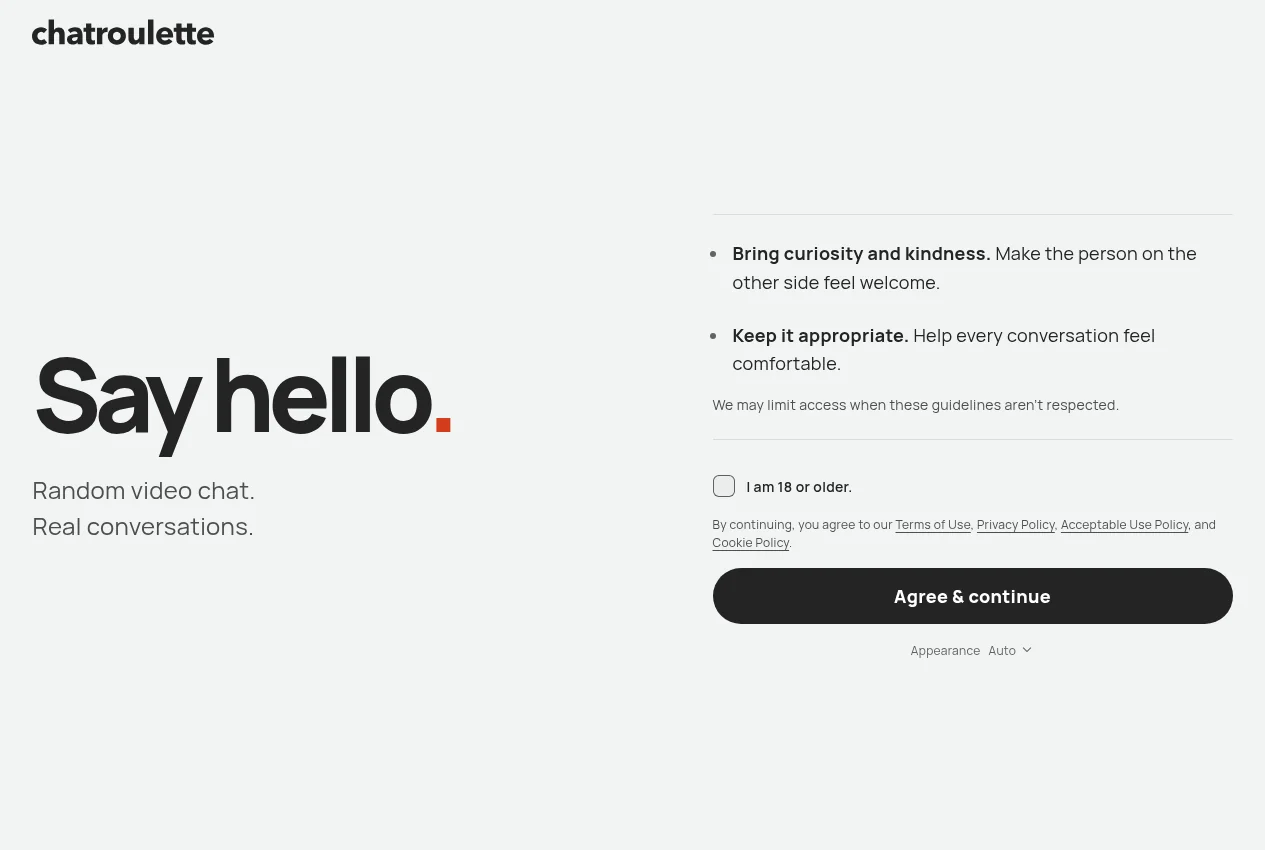
The comparison is not simply one website versus another. Ask how each service handles discovery and exits: can you move on without explaining yourself, do you understand the reporting tools, and are the rules visible before you begin? You also need to consider whether you value Bazoocam's built-in activities. If the mini-games are the reason you stay in a call, a plain roulette session may feel less engaging.
Our existing Chatroulette alternatives article covers other ways this format differs.
2. Camsurf: fewer steps, quick camera-on chats
Camsurf emphasizes fast webcam connections. When it works well, you do not spend long building a profile; you spend time actually speaking. This is useful if you use random video chat on a laptop with a functioning webcam and prefer a simple browser experience.

The trade-off is the familiar one with almost any random-call service: there may be little context about the person who appears. Instead of leading with a location question every time, try something less mechanical. Ask which song the other person has played on repeat or whether they have a favorite place to eat in their city. The questions work because they invite a story.
Do not assume that all filters or locations are available in the free version. Check the current interface. More options appear in our Camsurf alternatives comparison.
3. Shagle: random discovery with preference options
Shagle is another browser-centered service to investigate if you want random video calling and some degree of matching control. Preferences are where people often get confused: a service may let everyone start a conversation while reserving particular filters for upgraded access. The difference can be significant if you only want to speak to people from one region or have a particular matching preference.
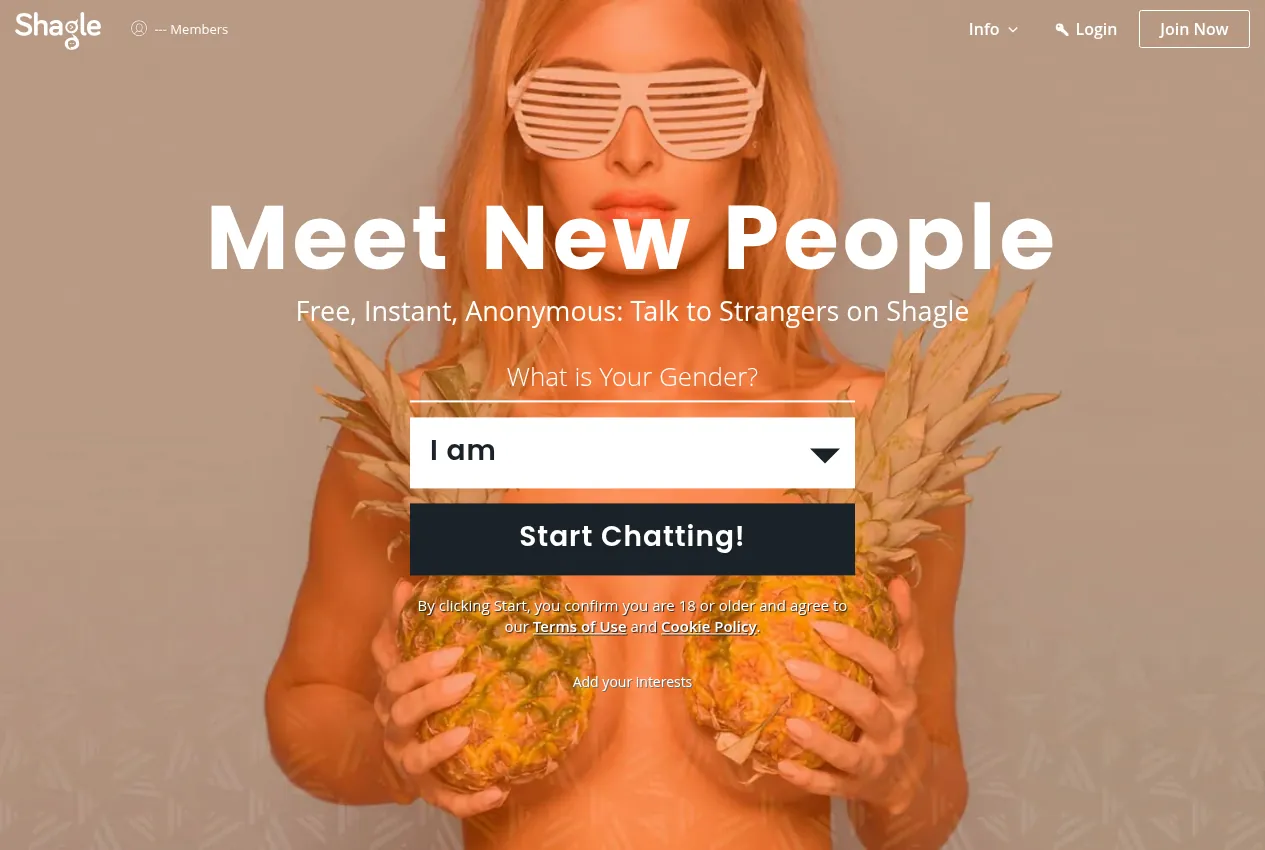
Before paying, test the basic experience and read the current offer. What changes after upgrading? Is there an automatic renewal? Can you cancel easily? Does the feature apply to the device you use? Do not make the decision solely from an advertisement that says “free video chat.”
See our Shagle alternatives guide for more ways to compare this category.
4. Camgo: text can be a better icebreaker than a game
Not every icebreaker has to be an animated game. Camgo offers text and video starting points, which makes it interesting if your favorite part of Bazoocam is easing past that uncomfortable first moment. Typing “What have you been watching lately?” can feel easier than saying it out loud to a stranger.
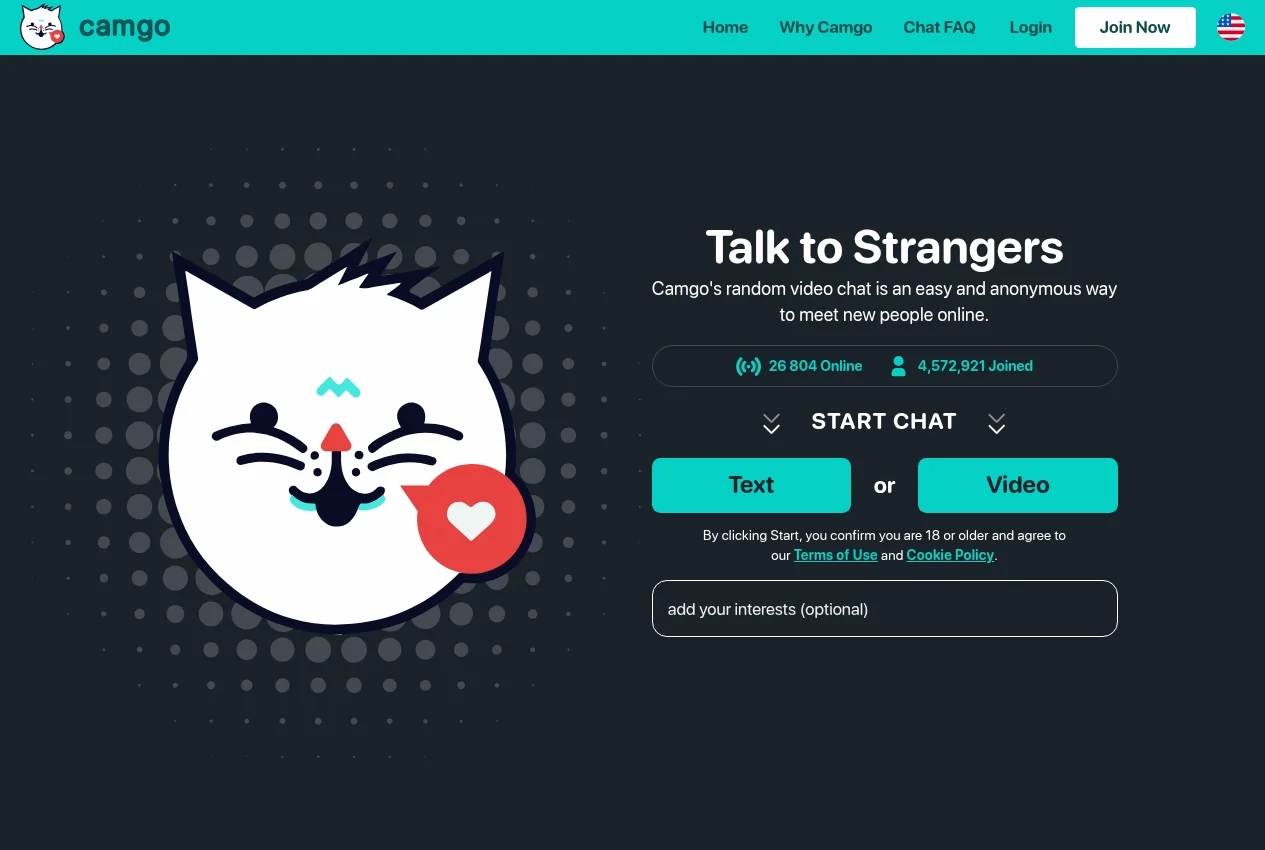
Try a short text conversation first, keeping the subject light and ordinary. If both people are comfortable and the service supports it, video can add tone and facial expression later. You should never treat a shift to camera as mandatory. Different comfort levels are perfectly compatible with a good conversation.
This alternative makes the most sense when the first impression, not the number of strangers, is your main challenge. Compare it with other options in our Camgo alternatives article.
5. Monkey: short social interactions with a faster pace
Monkey leans toward fast social discovery rather than Bazoocam's older, stripped-down aesthetic. That can be appealing if you want immediate energy and a modern mobile-oriented feel. But the difference in onboarding matters. Monkey has described sign-in as part of its flow, and support varies by platform; verify the live route before assuming it is a no-account webcam service.

A useful test is to ask whether a quicker format actually leads to better conversations for you. If you consistently skip before someone has finished introducing themselves, give the next person sixty seconds and one interesting question. If that still feels tiring, you may prefer a different social model entirely.
Find more context in Monkey alternatives.
6. OmeTV: for meeting people across borders
OmeTV is associated with international random video conversations. If your favorite Bazoocam sessions involve people from different countries, this can be a category worth exploring. The important distinction is that international reach does not mean you can guarantee a person from a specific country, nor that everyone speaks English.

A better approach is to prepare a few universally simple topics: food, music, local weather or the last film someone enjoyed. Speak clearly and pause for the other person's answer. If there is a language barrier, avoid pretending a location setting provides automatic translation. Check actual supported features and the current service rules.
For a broader category view, read our OmeTV alternatives guide.
7. YOYO: if you want to recognize someone next time
YOYO belongs here as an alternative way to socialize, not as a pixel-for-pixel replica of Bazoocam. Bazoocam's focus is the next random conversation; YOYO's current iPhone release history describes friend-based communication and the removal of random or anonymous chats from the app. The Web entry should be assessed separately because its exact interface and available actions may differ.
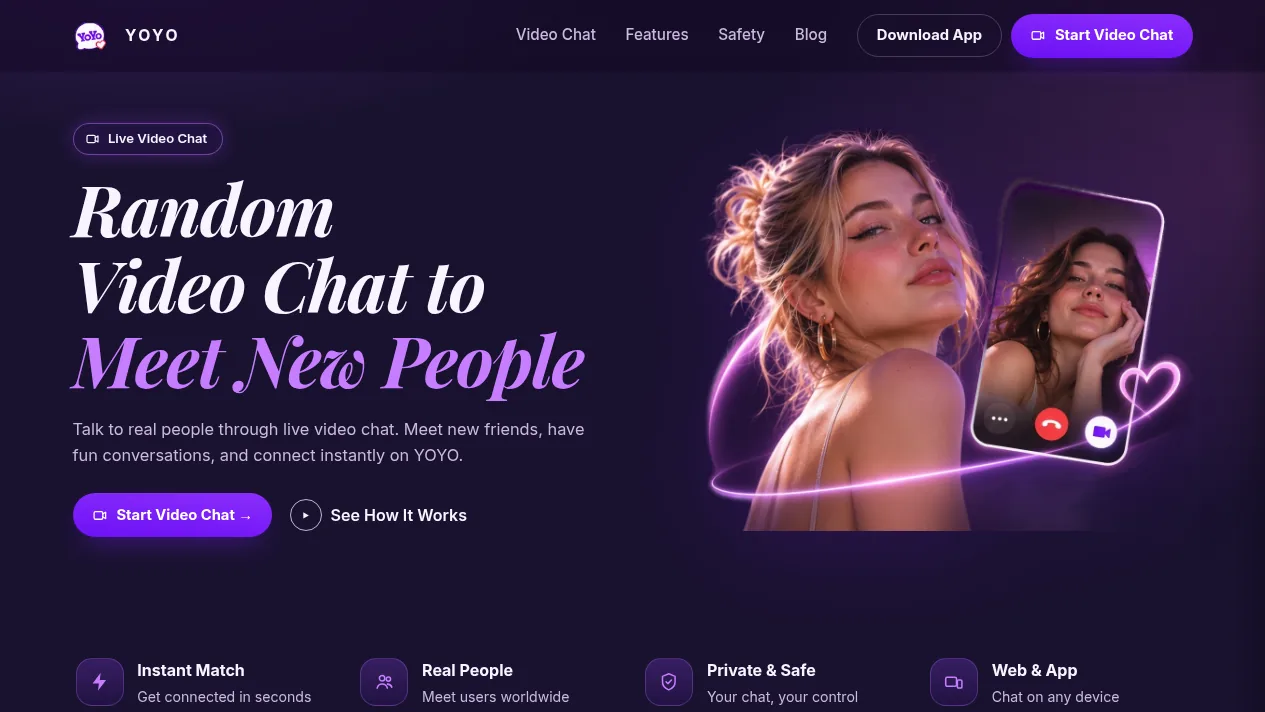
That makes YOYO potentially interesting for someone whose goal has changed. Maybe the novelty of meeting strangers was fun, but now you want to build a connection you can return to. A social flow may ask for account steps or mutual consent that a roulette site does not. Those are meaningful trade-offs, and the right answer depends on your expectations.
If this approach appeals to you, start with YOYO Web: how it works and check the official YOYO site.
A better way to compare these sites than a star rating
Use four short tests instead of browsing endless rankings.
The joining test: How long does it take to start? Is there a registration or age requirement? Do permissions feel clear? The conversation test: Does the service give you anything to discuss, such as an interest, language or shared activity? The control test: Can you leave, block or report without searching through multiple screens? The cost test: Is the specific feature you want included, or is there a subscription or coin purchase?
Give each factor a simple pass, uncertain or fail result. You may find that the platform with the fewest features is your best fit. Or the one with slower introductions may lead to much better conversations.
| If your biggest problem is... | Try this type of alternative | Simple first experiment |
|---|---|---|
| You just want the next random caller | Chatroulette or Camsurf | A ten-minute browser session |
| You want more matching preferences | Shagle | Compare basic and upgraded settings |
| You feel awkward on camera | Camgo | Start with three text messages |
| You enjoy quick social energy | Monkey or OmeTV | Test how the onboarding works |
| You want recurring connections | YOYO | Check its current social/friend flow |
What about Bazoocam's games?
The games are a real part of its appeal, and not every alternative has an equivalent. If you want a conversation aid, you can recreate some of the benefit without a built-in game: ask each other to choose a song for the other person, play a verbal “two truths and a lie,” or describe an object on the desk without naming it. Only do this if the other person welcomes it.
Do not let the game become a requirement. Some people are there simply to chat. Others are practicing a language or looking for a relaxed social moment. Treat the other person's interest as the starting point, not an obstacle to your plan.
Frequently asked questions
Is Bazoocam the same as Chatroulette?
They share the core random-webcam premise. Bazoocam also emphasizes built-in games, while the exact interface, policies and matching options differ. Check both services as they exist now.
Which Bazoocam alternative lets me start with text?
Camgo is worth investigating because it promotes separate text and video starting points. Always verify the current entry screens.
Is YOYO a random video chat website?
Do not assume it works like Bazoocam. YOYO's iPhone update describes friend-based interactions and removal of random anonymous calling. Its Web experience should be checked for current options.
Are all random video chat alternatives free?
No. Free entry, free basic calls and access to every filter are different things. Look at the specific action and any renewal terms before purchasing.
Can I stay safer on random video chat?
Use a non-identifying background, review camera permissions, learn the leave/report tools and do not share financial or identifying details. A stranger can record or capture information even when an app does not provide a recording button.
Pick the conversation, not just the website
Bazoocam is fun for people who love surprise and quick shared activities. If that remains your goal, start with a nearby roulette format. If the reason you are searching is that you want less randomness and more connection, a social product may be a more meaningful change than another nearly identical webcam queue.
To explore a more deliberate social option, visit YOYO and check which conversations are available to you today.