Not everyone enjoys the first thirty seconds of a video call. The camera switches on, another person looks at you, and suddenly there is pressure to be entertaining. If you tend to think before speaking or prefer a smaller social circle, that pressure can make an otherwise interesting conversation feel unnecessarily difficult.
You do not need to become an extrovert to enjoy video chat. What helps is choosing an interaction that suits your pace, removing a few avoidable distractions and giving yourself permission to have an ordinary conversation instead of a performance.
Quick answer: Start with a short, low-pressure call around a topic you already like. Prepare a comfortable setting and two real questions, let pauses happen, and agree on a finish time. If a platform's rapid random matching feels tiring, try a more deliberate social format instead. A good video chat is not measured by how many words you say.
Introversion is not the same as having nothing to say
People often use introvert as shorthand for being shy, but those descriptions are not identical. Someone may enjoy people while preferring a little time to warm up, or may be outgoing with friends and quieter with strangers. No single script describes everyone.
The useful question is: what specifically makes the video call harder? The answer changes the solution.
| What feels difficult | A practical adjustment | What you can say |
|---|---|---|
| The first hello | Decide on one topic before joining | “I saw you like photography. What do you shoot?” |
| Seeing yourself on camera | Use a self-view setting if available | “I'm going to focus on the conversation instead of my own video.” |
| Unexpected long calls | Suggest a 15-minute conversation | “I have about fifteen minutes—would that work?” |
| Talking over someone | Leave a beat after they finish | “Go ahead, I think I interrupted you.” |
| Not knowing how to leave | Prepare a polite closing | “This was nice. I'm going to sign off now.” |
| Rapid random matches | Choose a calmer or friend-based environment | “I'd rather talk about one shared interest.” |
None of these requires a big personality change. They make the situation easier to navigate.
Choose the kind of video chat that suits your energy
A rapid random matching platform can be fun when you want novelty, but meeting many people back to back may feel like starting the same conversation over and over. A scheduled language exchange, a shared-interest call or a friendship-oriented platform can offer more context from the beginning.
If you are exploring YOYO, review the current Web social flow and any account requirements. YOYO's iPhone App Store version history describes friend-based conversations rather than unrestricted anonymous roulette. That can be relevant if you prefer some context before a call, although it does not guarantee a particular experience or eliminate every awkward moment.
The key is to avoid forcing yourself into the loudest room because it looks popular. A smaller, calmer interaction may be more enjoyable and more sustainable. You can decide how much social energy you want to spend today.
Build a two-minute pre-call routine
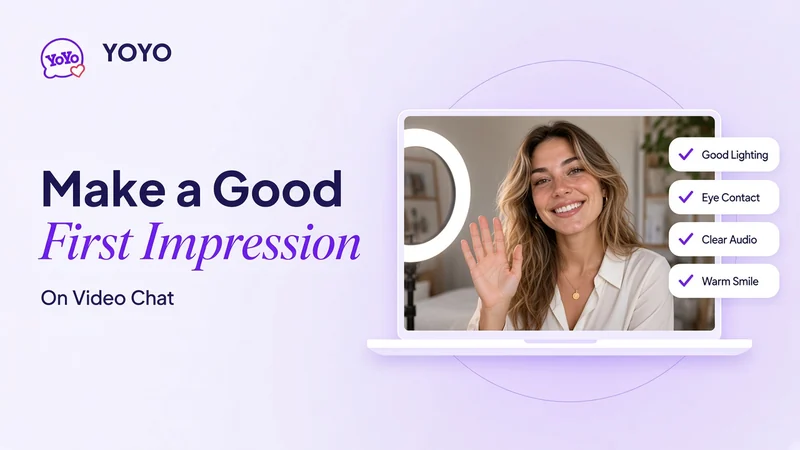
You do not need an elaborate studio setup. Check the camera, make sure your microphone works and move anything private out of the camera frame. Close extra tabs that may play unexpected sound. Put water nearby if it helps. If you are wearing headphones, confirm the correct microphone is selected.
Then write down just three things: why you're speaking, one shared topic and when the call ends. For example: “We both like film photography; I want to ask about a camera; I have twenty minutes.” That is enough structure to begin without scripting every possible reply.
If you worry about how you look on camera, use ordinary, indirect lighting and place the laptop at a comfortable height. Avoid spending half an hour adjusting your face or background. The purpose is to be seen and heard, not to produce a promotional video.
What to say in the first ten seconds
A good introduction has two pieces: a greeting and a reason for being there.
“Hey, good to meet you. I saw you were into electronic music too. Have you been to a good show recently?”
Or:
“Hi, I'm usually a little quiet at first, but I love talking about movies. What have you watched lately?”
The second example is a choice, not an obligation to disclose anything. You can simply ask a thoughtful question and let the conversation begin. You do not need to apologize for being quiet.
Avoid defaulting to an interview: “Where are you from? How old are you? What do you do? Are you single?” That can feel intrusive and leaves little room for shared stories. Start with something that the other person can answer at any level of detail.
Make one question do more work
Suppose your question is “Do you like music?” The answer may be one word. A more useful version is “What song have you had on repeat this week?” If the person names a track, you can react honestly and ask why they like it. That creates several paths without needing five prepared questions.
Three flexible follow-ups are enough for most conversations:
- “How did you get into that?”
- “What's the best part about it?”
- “Is there something you'd recommend to a beginner?”
The trick is to share something of your own before asking the next question. “I got into photography through taking night photos of my city” invites reciprocity. Silence after a thoughtful answer is also fine; someone may be thinking rather than disengaging.
What to do when the room goes quiet
A pause can seem longer over video because you see the other person's face and may not know whether the connection has lagged. Count a beat in your head before rushing to fill it. If the audio is delayed, speaking immediately can cause interruptions.
If the pause continues, name a concrete shared detail: “You mentioned a book earlier. Was the ending any good?” Or offer a tiny change of subject: “Different question—what's something you enjoyed this weekend?” It is also fine to laugh gently and say, “I think we're both thinking.” Not every gap needs a rescue operation.
If the other person gives consistently short replies or seems distracted, you are allowed to end the call. A conversation needs two willing participants. You cannot sustain it alone, and that is not a reflection of your worth or conversational skill.
Use a shared activity instead of endless small talk
A small activity can take the pressure off the camera. You might trade one song recommendation, each show a harmless object that represents a hobby, describe a favorite travel photo or discuss a short video you both watched. The activity provides something to react to, and the camera becomes a tool rather than the main event.
Choose activities that respect privacy. Do not pressure someone to show their bedroom, reveal a workplace badge or turn the camera around their home. If a platform supports text chat during a call, typing a title or a difficult word may also help, especially across languages.
Agree on a short first call
Fifteen minutes can be enough to find out whether you enjoy talking with someone. It is easier to agree to and less intimidating than an open-ended call. A possible structure is three minutes to settle in, eight minutes on a common interest and a few minutes for a second topic or closing.
You can say at the beginning: “I've got about twenty minutes, but I'd love to hear about that project.” At the end, a straightforward closing works: “Thanks, I enjoyed talking. I'm going to head off now.” The end of a call does not require a dramatic excuse.
If you both want to speak again, suggest a small activity for next time. If you do not, a polite goodbye is complete in itself.
The privacy advantage of preparing your space
Comfort is not only emotional. Knowing that your camera frame is under control helps you relax. Before joining, check what appears behind you, whether your browser is on the correct site and what you are agreeing to share. A stranger may take a screenshot or record a call even if no recording feature is visible.
Keep location details, financial information and private contact details out of the first conversation. Review the platform's reporting and blocking tools before you need them. For a fuller checklist, see video chat privacy before your first call.
How to know whether a call went well
Do not measure success by how long you spoke or how entertaining you appeared. Better signals are: the conversation felt respectful, you could express a real opinion, you learned something about each other, and you had room to end when you wanted.
You may also feel tired after a perfectly good social call. That is useful information for scheduling the next one, not evidence that it failed. If you enjoyed talking but need a quiet evening afterward, you can plan fewer calls instead of trying to become someone who enjoys constant social contact.
Frequently asked questions
Is video chat good for introverts?
It can be, especially when the call is short, the topic is meaningful and both people can end comfortably. The best format depends on your preferences rather than a personality label.
What if I have nothing to say?
Prepare one shared topic and ask a question that invites a story. Follow the answer rather than reading from a long list. A quiet moment does not automatically mean the conversation is failing.
Should I tell someone I'm shy?
Only if you want to. Some people find a casual acknowledgment helpful; others prefer simply beginning with a question. You do not need to explain your personality to deserve a conversation.
Can I keep my camera off?
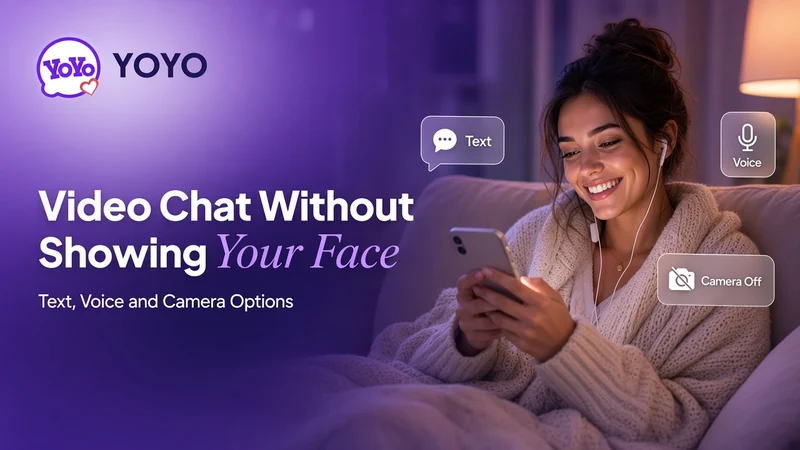
That depends on the product's available modes and the other person's expectations. Choose a service that supports your preferred format rather than assuming all video chat tools offer audio-only access.
How do I leave without seeming rude?
Keep it simple: “I enjoyed chatting, but I'm going to sign off. Take care.” Setting an end time early can make this feel even more natural.
Make room for the kind of conversation you enjoy
Video chat does not have to be loud, fast or exhausting. A real topic, a comfortable setup, a clear ending and permission to pause can make it feel like an ordinary human interaction.
If you want to explore a social video environment at your own pace, visit YOYO and check its current Web conversation options.