Tumile makes meeting people across borders feel immediate: open the app, find someone to speak with and use translated messages when the languages do not match. But the right alternative depends on which part of Tumile you actually use. Do you want more control over who you meet? A conversation that feels less like a rapid sequence of strangers? Or a way to try video chat without installing another app?
Quick answer: Start with YOYO if you want to explore a more social, conversation-led video experience; Azar if translation during international video calls is central; LivU for a mobile-first global chat experience; HOLLA for quick random matches; Monkey for spontaneous social discovery; Camsurf for lightweight browser-based random video chat; and Camgo if you would rather begin with text and switch to video later. No single platform is better for everyone.
Tumile vs. the alternatives at a glance
| Platform | Best starting point | How you meet people | Web or app? | What to check before paying |
|---|---|---|---|---|
| YOYO | More deliberate social discovery | Current social / video-chat flow | Explore through YOYO's website; app availability varies | Sign-in and current access rules |
| Azar | Crossing language barriers | International video matching | App-led experience | Translation availability and matching preferences |
| LivU | Mobile global conversations | Matching and friend discovery | Mobile-first | Coins, gifts and premium access |
| HOLLA | Instant encounters | Random one-on-one video | Web entry and app options | Filters, coins and subscriptions |
| Monkey | Fast social discovery | Spontaneous video matches | Web and supported mobile options | Sign-in requirements and optional extras |
| Camsurf | Minimal setup | Random webcam matching | Browser and Android app | Available filters and device support |
| Camgo | Text before camera | Text or random video; interest prompts | Browser on desktop and mobile | Optional Plus features |
Features and billing differ by region, device and product version. This table compares the experience each service promotes, not a guarantee that every feature is free.
Why look for a Tumile alternative?
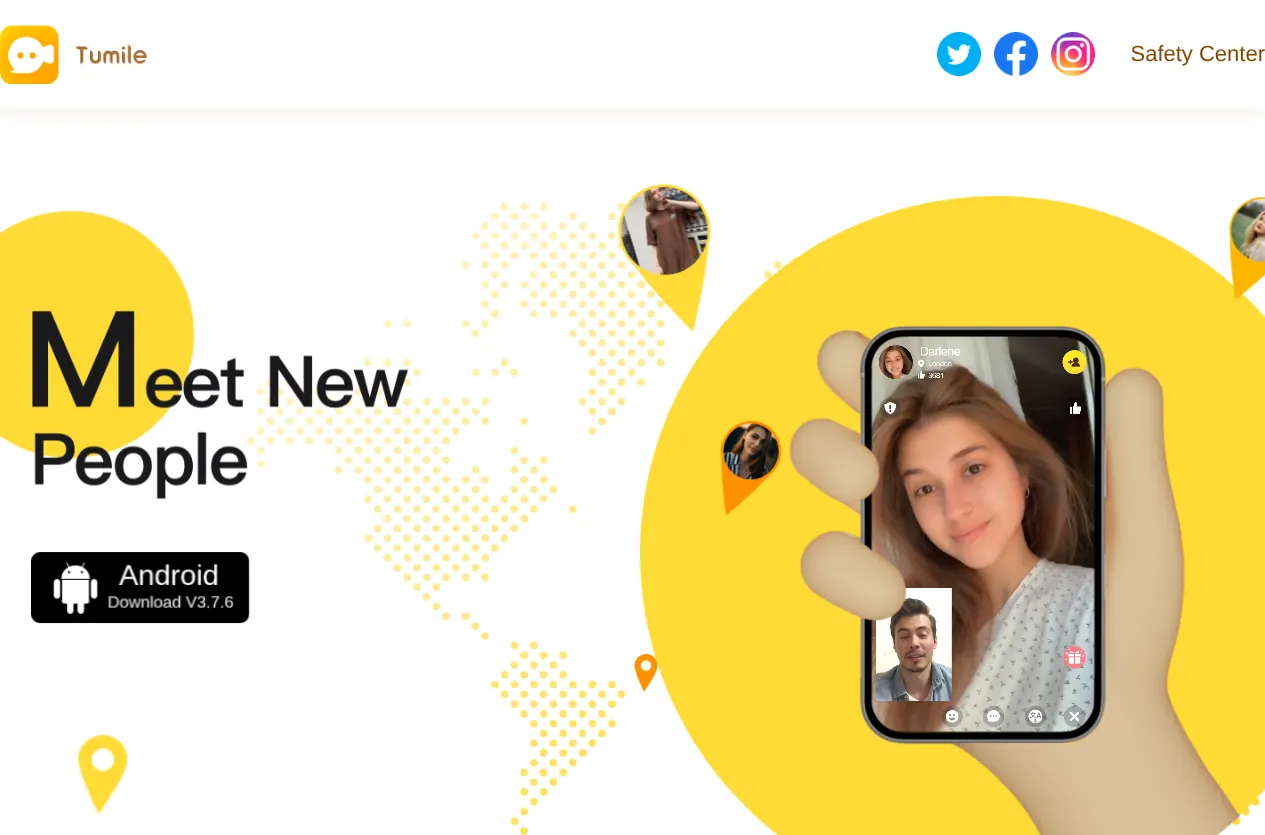
Tumile's strengths are specific. Its app listing describes region-based discovery, direct video calls, translated text messages and on-screen effects. Tumile also makes a distinction between free downloads and paid features: some premium actions require coins. That matters because “free to install” and “free to keep using exactly the feature you want” are different promises.
Three common reasons to try something else are worth separating. Cost is one: you may prefer to know the price of a longer call or a filter before investing in the conversation. Pace is another: random or near-random introductions can be exciting but exhausting when you want to speak to one person for more than a minute. Device choice is the third: a browser-based option can be more convenient than an additional mobile app, particularly on a laptop.
Pick the alternative that fixes your problem rather than one that simply looks similar in screenshots.
1. YOYO — for a more social way to meet people
YOYO is worth exploring when the appeal of Tumile is the possibility of meeting someone interesting, not necessarily the random-match mechanic itself. A social, conversation-led video environment may fit people who would rather look for a compatible connection than spend the entire session tapping Next.

This is not a promise of an identical Tumile replacement. YOYO's current app experience has changed over time, and its mobile listing describes a friend-based approach rather than anonymous random calling. Its Web experience should be assessed separately. Check the current sign-in steps, available chat options and whether the kind of connection you want is supported before committing.
Best for: people open to a different pace of online social discovery. Trade-off: not the best pick if your only goal is anonymous, endlessly skippable video roulette.
Explore YOYO or read how YOYO Web works.
2. Azar — for live translation and international calls
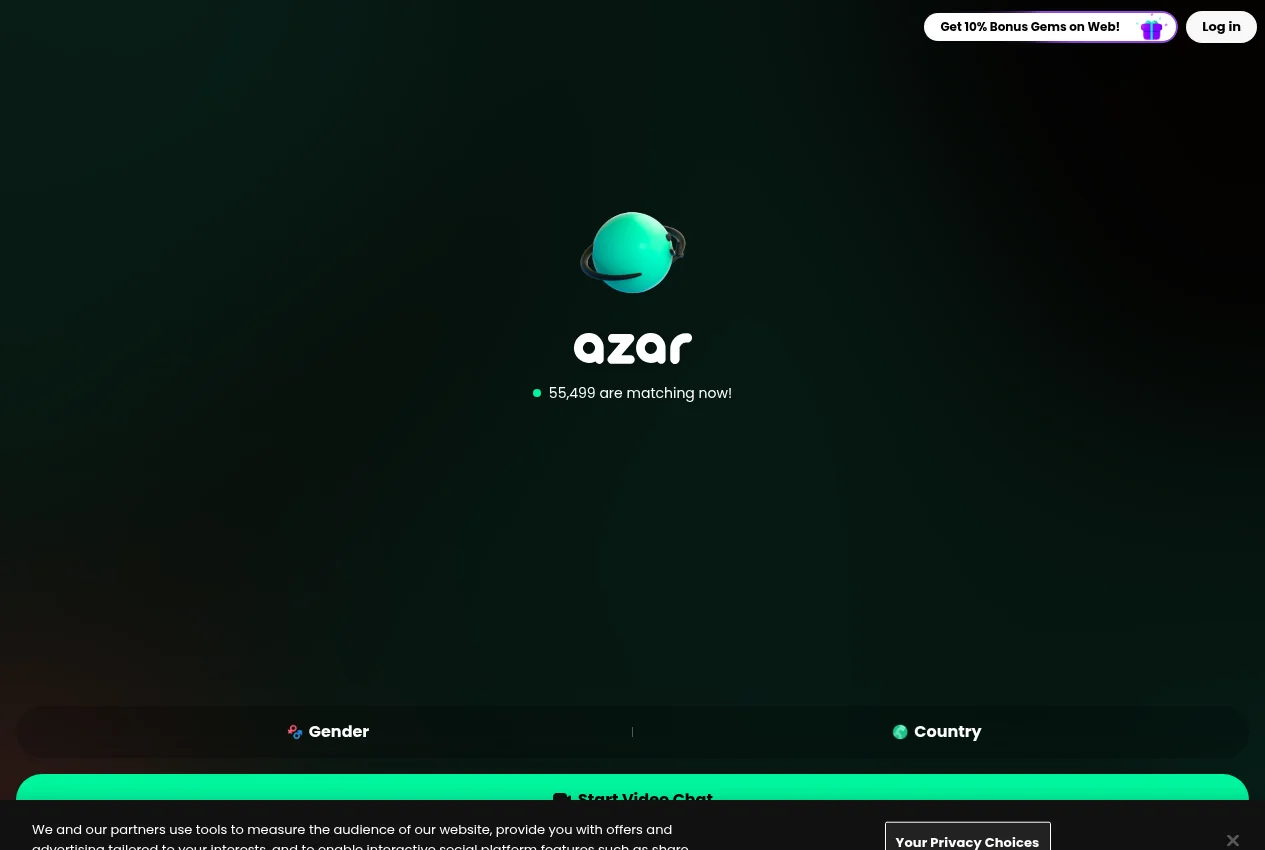
If the main reason you installed Tumile was to talk with people who speak other languages, Azar belongs near the top of your shortlist. Azar's support documentation describes a live translation flow that converts speech to text, translates it and displays subtitles during a video chat. Feature availability can vary by device, so confirm it in your current version.
The important distinction is translated messages versus translated speech. Tumile's app listing emphasizes instant message translation; Azar documents a subtitle-based live translation feature. These solve related but different problems. If you want to hear a conversation unfold and read the meaning in near real time, translated subtitles may be more useful. If you mainly send messages while chatting, a message translator can be enough.
Best for: cultural exchange across language barriers. Trade-off: matching preferences and translation features may not be available on every device or tier.
3. LivU — for app-first global social video chat
LivU focuses on discovering people through video conversations, then finding ways to stay in touch. Its official materials highlight friend matching, video chat and virtual gifts. Its support team also confirms an in-app translation feature for conversations with people from other countries.

That makes LivU a familiar option for someone coming from Tumile: both lean into international social interaction and interactive app features. Before switching, compare the actual cost of the activity you repeat most. An introductory free action or a reward does not tell you what a regular week of calls will cost. Test the matching flow, inspect the wallet and decide whether extras genuinely improve your experience.
Best for: people comfortable using a dedicated social app. Trade-off: less appealing if you specifically want a no-install browser session.
4. HOLLA — for spontaneous one-on-one video calls
HOLLA's homepage positions it around instant random one-on-one video conversations with people worldwide. It advertises basic random calling at no cost, while its terms explain that paid coins and subscriptions are also offered. So there is a meaningful distinction between entering a conversation and using every matching preference.

Try HOLLA when you like Tumile's instant-contact feeling but do not care as much about ongoing profile discovery. You might spend five minutes meeting several people, or stay longer if the conversation clicks. If language matters, check the preferences before connecting, and remember that a language preference does not guarantee the other person speaks it fluently.
Best for: low-commitment, spontaneous meetings. Trade-off: less predictability about the next conversation; optional paid features can complicate the costs.
5. Monkey — for quick, spontaneous social discovery
Monkey's current site describes an immediate video-matching experience and supported browser access, with app availability depending on platform. It also says users need to sign in before starting. That small difference matters if you liked the idea of opening a website anonymously and chatting without an account.

Monkey is a better match for someone who finds the surprise of a new person more exciting than building a detailed profile. It is less suitable if you expect a built-in translation tool to do most of the work during a multilingual conversation: do not assume that a platform centered on matching offers Tumile's language assistance.
Best for: spontaneous social encounters. Trade-off: account requirements and rapid matching may not suit users looking for slower introductions.
6. Camsurf — for quick browser video chat
Camsurf is closer to classic random webcam chat. Its official site describes a simple flow: agree to the terms, allow camera access, click Start and move on to the next conversation when you want. It also discusses location and language selection and a text box alongside the video feed.

If you primarily want to try another video chat service on a laptop, Camsurf is convenient because the browser experience is central rather than an afterthought. It is not a one-to-one substitute for Tumile's app-specific gift, effect and translation experience. Think of it as a more stripped-down way to meet strangers.
Best for: desktop-first visitors who want minimal setup. Trade-off: fewer social-app-style features than Tumile.
7. Camgo — for text-first introductions
Camgo has a useful advantage for anyone who feels awkward switching on a camera immediately: its website offers separate text and video entry points. You can try a simple written introduction, add an interest prompt and decide whether live video is what you want next.
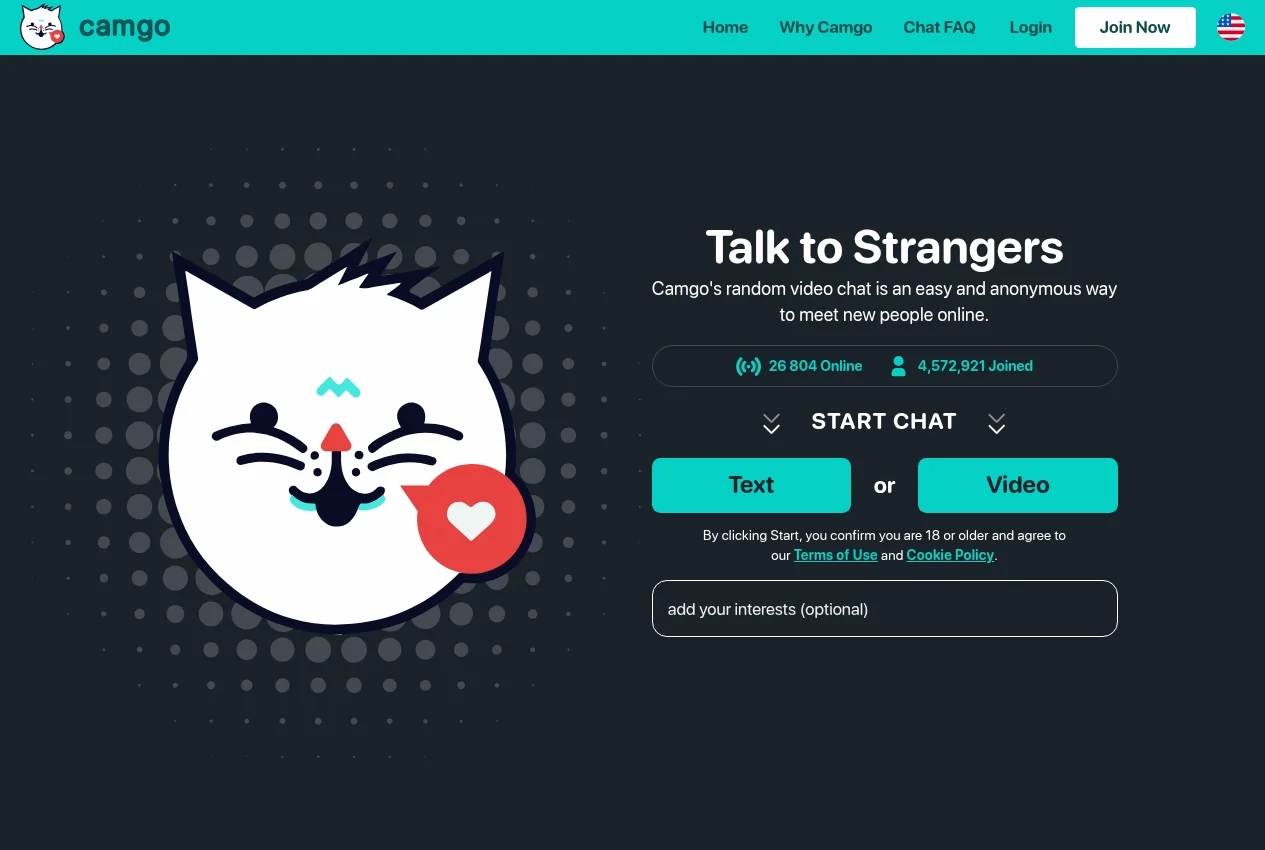
This is especially useful for language learners who need a few seconds to compose a sentence, or for people checking whether they are comfortable before turning on their webcam. Camgo also offers interest-based prompts, although a shared interest does not guarantee an excellent match.
Best for: shy starters, text-first conversations and browser access. Trade-off: it does not replicate Tumile's complete app-based social experience.
Which Tumile replacement should you choose?
Rather than downloading all seven, use a three-question test:
Do you need automatic translation? Start by comparing Azar and LivU, then check the feature on your actual device. A translated subtitle and an automatically translated text message are not interchangeable.
Do you want a stranger in seconds? Try HOLLA, Monkey or Camsurf. The appeal is immediacy; the cost is that chemistry is unpredictable.
Do you want to control the pace? Consider Camgo's text-first approach or explore YOYO's current social flow. Slowing down the introduction can be more valuable than adding another filter.
A sensible test is 15 minutes per platform. Record whether you could start, whether the person you met matched your expectations, whether the conversation felt worth continuing and whether any payment prompt appeared. That tells you more than a huge features checklist.
Staying comfortable and in control
Any live chat with unfamiliar people requires some discretion. Keep your address, personal phone number and payment details off-camera. Treat an invitation to move to a private messaging app as optional, not an obligation. If someone sends a payment request or insists you click an unfamiliar link, end the conversation. Use the platform's report function if necessary.
A translation tool also isn't a guarantee of mutual understanding. If something sounds strange, ask a short follow-up rather than assuming the translation captured the intention perfectly.
Frequently asked questions
Is Tumile free?
Tumile is free to download and advertises free features, but some premium features require coins. Check the current in-app price before using an optional paid feature.
Which Tumile alternative has translation?
Azar documents live translated subtitles, while LivU describes in-app translation. Confirm current availability on your device and in your region. Tumile itself describes instant message translation.
Can I replace Tumile with a browser video chat?
Yes, if browser access matters more to you than getting precisely the same social features. Camsurf and Camgo are clear browser-first options. You can also explore YOYO's website to understand its present Web experience.
Is YOYO the same as Tumile?
No. Both relate to meeting people through video and social interaction, but their sign-in rules, matching flows and available features are not identical. Treat YOYO as a different style of social video experience, not a carbon copy.
What should I check before paying for a video chat app?
Find out what the purchase unlocks, whether it renews automatically, whether unused coins expire and how cancellation works. Try the free entry point first when available.
The bottom line
Tumile is a reasonable choice for people who like mobile video chat with translated messages, visual effects and an international social focus. Switch only if another service solves something that bothers you: getting started in a browser, reducing the pressure of immediate video or changing how you meet people. For a conversation-led alternative, take a look at YOYO; for a pure random-cam session, start with Camsurf or HOLLA.
If you're deciding how much of a chat app you actually need, see our free vs. paid video chat guide and video chat with translation explained.