You might be learning Korean, discovering Korean films or simply interested in everyday life in another country. Video chat can turn that curiosity into a conversation, but it works best when you treat the person as an individual rather than as a representative of an entire culture. You can look for a Korean-speaking language partner, join a shared-interest community, or try international social discovery.
This guide is for adults who want to make friends and practice conversations respectfully. No app can promise that you will meet a person of a particular nationality, and a language field is not proof of where someone lives.
Where to look for Korean-speaking conversations
| Your goal | Starting point | Why it fits |
|---|---|---|
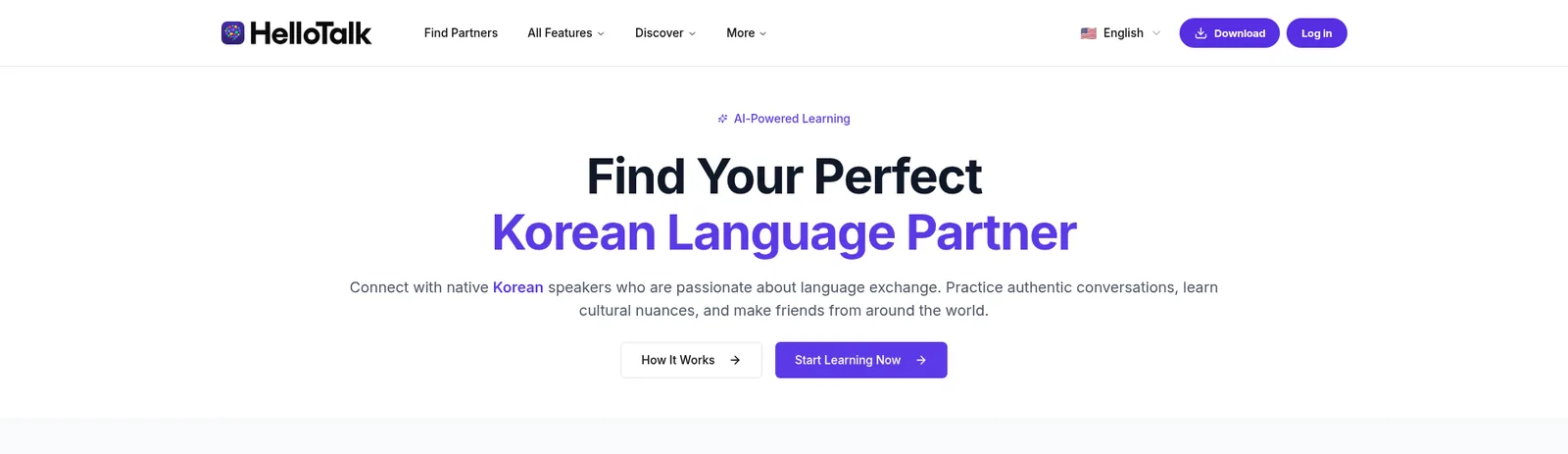
| Regular Korean practice | A language-exchange community such as HelloTalk | Partners explicitly choose languages to learn |
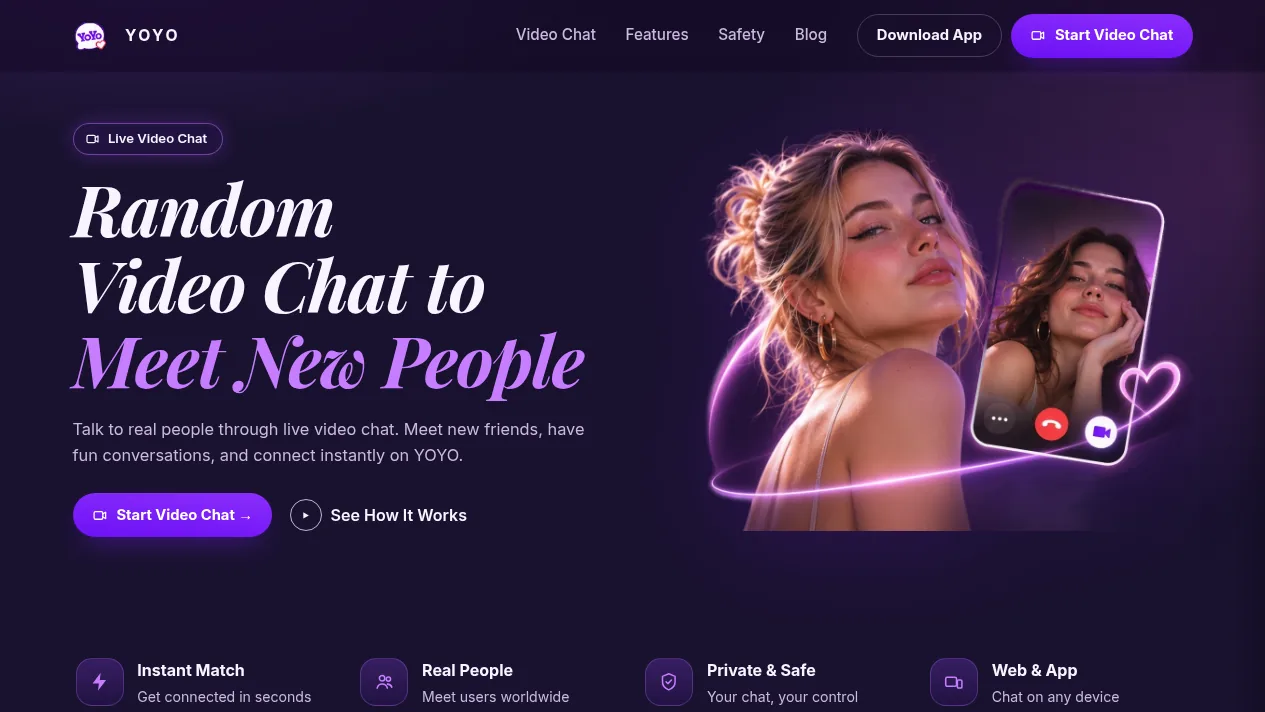
| Casual international friendship | YOYO's international community | Discover people and communicate after mutual connection in the iPhone app |
| Discuss a shared interest | A moderated film, music or gaming community | Start with a topic instead of nationality |
| Catch up with a known friend | A private video meeting link | Agree on a time and speak without random discovery |
HelloTalk's Korean partner page describes matching language learners with people who want to practice together. If your priority is consistent study, that is often more efficient than hoping a random match speaks Korean. If you are interested in a broader international community, YOYO's official app advertises multilingual translation and mutual-friend communication. Korean is not among the explicitly named translation languages in the description checked for this guide, so confirm support before relying on it.
Plan around Korea Standard Time
South Korea uses Korea Standard Time (KST, UTC+9). If you suggest a call at 8 pm in Seoul, that is 11 am UTC, 2 pm in Türkiye and 7 pm in Beijing. For countries that use daylight saving, recalculate the offset for the date of the call.
Rather than trying to guess when a particular person is free, offer two choices: “Would you prefer Saturday afternoon or Sunday evening, your time?” Add both time zones to the agreed invitation. Avoid treating someone's nationality as a signal that they will be online at a specific time.
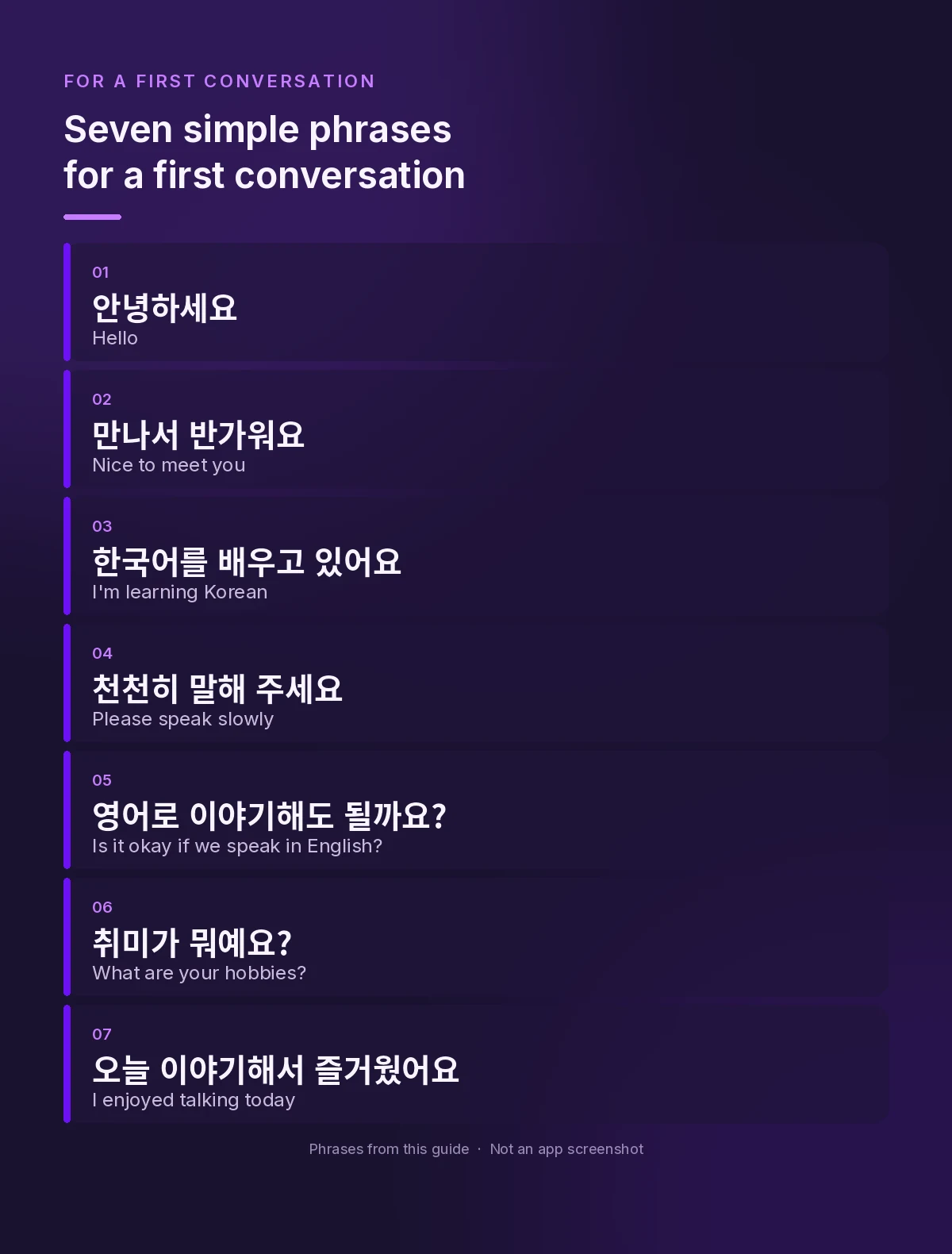
Seven simple phrases for a first conversation
| Korean | Meaning | When to use it |
|---|---|---|
| 안녕하세요 | Hello | A polite first greeting |
| 만나서 반가워요 | Nice to meet you | After introducing yourself |
| 한국어를 배우고 있어요 | I'm learning Korean | Explain your level |
| 천천히 말해 주세요 | Please speak slowly | When you need more time |
| 영어로 이야기해도 될까요? | Is it okay if we speak in English? | Ask permission to change language |
| 취미가 뭐예요? | What are your hobbies? | Open a shared-interest discussion |
| 오늘 이야기해서 즐거웠어요 | I enjoyed talking today | A friendly ending |
You do not have to use every phrase. A polite hello and one question are enough. If you are using translation, tell your partner and keep the message short. Avoid using intimate or informal address terms until you understand the relationship and context.
Start with a topic rather than a stereotype
A conversation about music can begin with “What have you been listening to lately?” instead of assuming that someone likes K-pop. If you enjoy cooking, ask about a dish they would recommend trying at home. If you like films, ask what they watched recently. These questions invite personal answers and work regardless of someone's cultural background.
Try one of these opening exchanges:
Language exchange: “Hi! I'm learning Korean. Would you like to practice Korean and English for five minutes each?” Then wait for agreement.
Shared interest: “I recently watched a Korean film and enjoyed the soundtrack. What kind of movies do you like?” Let the other person choose whether to discuss Korean cinema at all.
International friendship: “What's something you enjoy doing on a weekend?” Follow their answer rather than moving through a list of scripted questions.
Use a 10-minute exchange structure
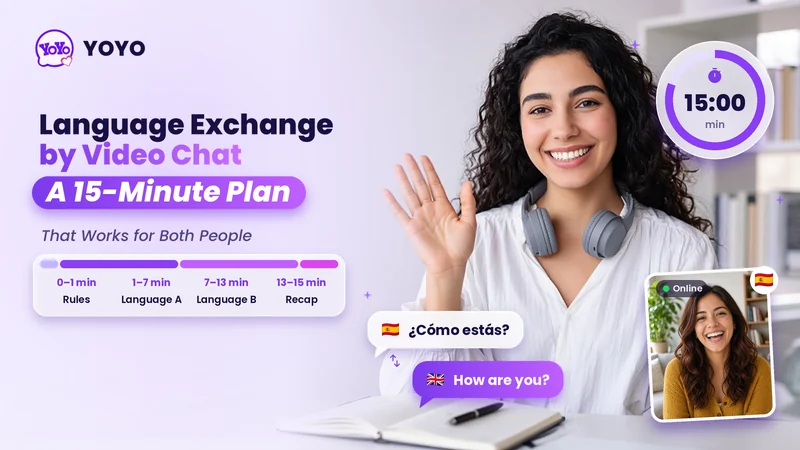
Start with a greeting and explain what you hope to practice. Spend four minutes in the language you are learning, four minutes in the language your partner wants to practice, and finish by sharing one new word each. Agree on whether corrections should happen immediately or at the end. A mutual learning exchange is more balanced than asking someone to teach you for free without offering anything in return.
If pronunciation is difficult over video, ask whether a text message or a short written example would help. Do not treat a machine-translated sentence as definitive; tone and politeness may be lost. See our international video chat guide, 15-minute language exchange plan, and translation guide for more ways to communicate across languages.
Keep the connection comfortable
If the conversation goes well, ask whether the other person would like to chat again through the same service. YOYO's iPhone app describes mutual-friend communication, not anonymous instant calls. Do not pressure someone to share a personal social account, send photos or move off-platform. Use the privacy controls of the service you choose and stop if the interaction becomes uncomfortable.
Frequently asked questions
Can I find Korean people through random video chat?
You may meet Korean-speaking people, but a random service cannot guarantee nationality, language or availability. A language-exchange community is more targeted.
Do I need to speak Korean?
No. Ask which language your partner is comfortable using. Learning a few polite phrases can make the first conversation easier.
Does YOYO translate Korean?
The official app description names several languages but does not explicitly confirm Korean in the source checked here. Verify the available language list in the current version.
What is a good time to suggest a call?
Agree on a time using KST (UTC+9) and your own local timezone. People have individual schedules, so ask instead of assuming.
Begin with curiosity and respect
Choose a shared topic, speak at a pace that works for both people and offer a friendly follow-up only if they are interested. Discover YOYO for its international social options, or choose a language-exchange service when consistent Korean practice is your main goal.